Materials

Stainless Steel

Types
304, 304L, 316, 316L, 321

Special Alloys

Copper, Nickel, Monel, Hastelloy, Inconel and so on.

Other Special Steel

Contact us and tell us about
your requirements.

material pt demister

Material Selection for Demister Pads & Mist Eliminators

In wire mesh demister and vane-type mist eliminator design, material selection is arguably the single most critical engineering decision. The material determines not only the equipment's service life but also its separation efficiency, pressure drop stability, and resistance to the aggressive process conditions found in oil & gas, petrochemical, marine, desalination, pharmaceutical, sugar, and flue gas applications. A demister pad fabricated from the wrong alloy can fail within months due to pitting, stress corrosion cracking, or thermal fatigue — leading to unplanned shutdowns, contaminated downstream products, and costly process losses.

At Epal Samudera, we engineer every mist eliminator around the specific chemistry, temperature, pressure, and flow regime of the client's process. Understanding how material properties interact with service conditions is the foundation of a reliable, long-lasting demister.

Why Material Selection Matters

A demister pad operates in a continuously wetted, high-turbulence environment where fine liquid droplets impinge on densely knitted wire. Even minor corrosion on the wire surface roughens the geometry, promotes premature re-entrainment, and accelerates plugging. Over time, this degrades separation efficiency below the 99.5% removal targets typical of quality mist eliminators. Choosing the correct material ensures:

  • Consistent separation efficiency across the design flow envelope
  • Extended service life — typically 5 to 15 years depending on duty
  • Stable pressure drop with minimal fouling and scaling
  • Structural integrity under thermal cycling, vibration, and pulsating flow
  • Regulatory and safety compliance for hydrocarbon, pharmaceutical, and food-grade service

How Material Properties Affect Demister Performance

Corrosion Resistance

Corrosion is the leading cause of demister failure. Exposure to chlorides (seawater, brine), sulfuric acid, hydrogen sulfide, ammonia, amines, and organic acids attacks unsuitable metals through pitting, crevice corrosion, and stress corrosion cracking. The material must be compatible with both the bulk fluid and trace contaminants.

Operating Temperature Limits

Each alloy has an upper service temperature beyond which creep, scaling, and loss of mechanical strength compromise the wire mesh structure. Standard austenitic stainless steels perform well up to roughly 800°C in oxidizing atmospheres, while nickel-based superalloys can handle sustained service above 1000°C.

Mechanical Strength and Durability

The fine wire diameter used in knitted demisters (typically 0.10 to 0.28 mm) demands high tensile strength and ductility to withstand knitting, crimping, and long-term vibration without fatigue fracture. Adequate yield strength also prevents pad compaction under differential pressure surges.

Cost vs Performance Tradeoffs

Exotic alloys can cost 10 to 50 times more than 304 stainless steel. Over-specifying inflates capital cost; under-specifying leads to premature replacement and production losses. The optimum material balances initial investment against total lifecycle cost, including downtime, spare inventory, and process impact.

Stainless Steel Demister Pads

Stainless steel is the workhorse material for mist eliminators, offering an excellent balance of corrosion resistance, fabricability, strength, and value.

AISI 304 & 304L

The most widely used austenitic grades, 304 and 304L provide reliable service in mildly corrosive environments such as steam separation, air filtration, low-sulfur hydrocarbon vessels, and general-purpose chemical duty. The low-carbon 304L variant minimises sensitisation and intergranular corrosion at weld zones, making it preferable for fabricated internal structures. Limitations include poor resistance to chlorides and reducing acids.

AISI 316 & 316L

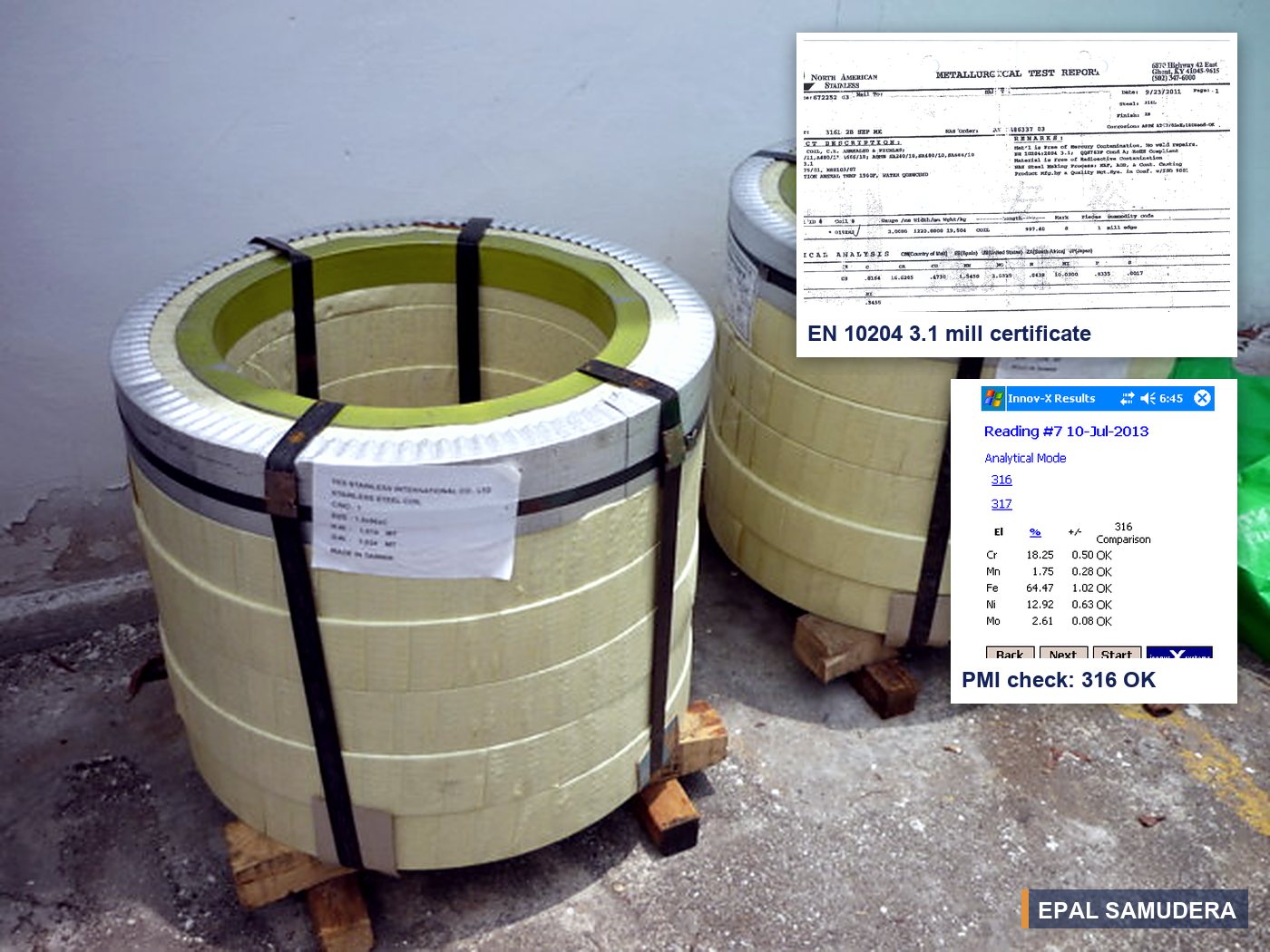
The addition of 2-3% molybdenum gives 316 and 316L significantly improved resistance to pitting and crevice corrosion in chloride-bearing media. These grades are the default choice for refinery overhead separators, offshore gas scrubbers, sulfuric acid mist capture, and pharmaceutical vessels. 316L is recommended wherever welding is involved.

AISI 321

Titanium-stabilised 321 resists sensitisation at elevated temperatures between 425°C and 900°C, making it the preferred grade for high-temperature flue gas, cracker off-gas, and thermal power applications.

Special Alloys for Aggressive Service

When stainless steel cannot withstand the process chemistry, nickel-based and specialty alloys deliver the necessary corrosion resistance and thermal stability.

Copper and Copper Alloys

Used in cryogenic air separation, refrigeration systems, and certain hydrocarbon separations where excellent thermal conductivity and non-sparking characteristics are valuable.

Nickel 200 / Nickel 201

Pure nickel is outstanding in caustic (sodium hydroxide, potassium hydroxide) service up to high concentrations and elevated temperatures, where stainless steels rapidly fail by caustic stress corrosion cracking.

Monel 400

A nickel-copper alloy, Monel is the benchmark material for seawater, brine, desalination evaporators, and hydrofluoric acid service. Its exceptional resistance to chloride stress corrosion makes it indispensable in marine and coastal installations.

Hastelloy C-276 / C-22

These nickel-molybdenum-chromium superalloys resist the most aggressive oxidising and reducing acids, including hot hydrochloric acid, wet chlorine, ferric chloride, and mixed acid service common in specialty chemical, pulp and paper, and flue gas desulfurisation (FGD) plants.

Inconel 600 / 625

Inconel excels in high-temperature oxidising atmospheres, fired heater ducts, incinerator scrubbers, and nuclear steam applications where sustained service above 800°C is required.

Other Special Materials

Certain extreme or niche applications demand materials beyond conventional metallurgy:

  • Titanium (Grade 2, Grade 7) — unmatched in seawater, wet chlorine, and oxidising chloride environments; standard for desalination MSF/MED units and chlor-alkali service.
  • Duplex & Super Duplex Stainless Steel (2205, 2507) — combines high strength with superior chloride pitting resistance, widely used in offshore topside separators and sour gas service.
  • FRP (Fiber Reinforced Plastic) — cost-effective for low-temperature acid mist capture in scrubbers, pickling lines, and electroplating exhaust.
  • PTFE and Polypropylene — non-metallic vane packs and mesh for strong acid, chlorine, and ultra-pure chemical service below 120°C.

For unusual or proprietary processes, our engineering team provides material consultation backed by corrosion data, field experience, and pilot testing.

Material Selection Guide

Industry / ServiceTypical Fluid / ConditionRecommended Material
Steam drums, air filtrationClean steam, ambient airSS 304 / 304L
Refinery overhead, gas scrubbersHydrocarbons with chloridesSS 316 / 316L
High-temperature flue gas425–900°C oxidisingSS 321
Sulfuric acid mistDilute H₂SO₄SS 316L / Alloy 20
Caustic serviceNaOH, KOHNickel 200 / 201
Seawater & desalinationBrine, chloridesMonel 400 / Titanium
Chlor-alkali, wet chlorineCl₂, HClTitanium Gr 7 / Hastelloy
FGD scrubbersSO₂, fly ash, chloridesHastelloy C-276
Incinerators, fired heatersHigh-temp combustion gasInconel 625
Sugar evaporatorsJuice vapour, mild acidsSS 304 / 316
Pharmaceutical vesselsSanitary, CIP/SIPSS 316L electropolished
Acid scrubbers, platingCold strong acidsFRP / PTFE / PP

The Role of Construction Quality

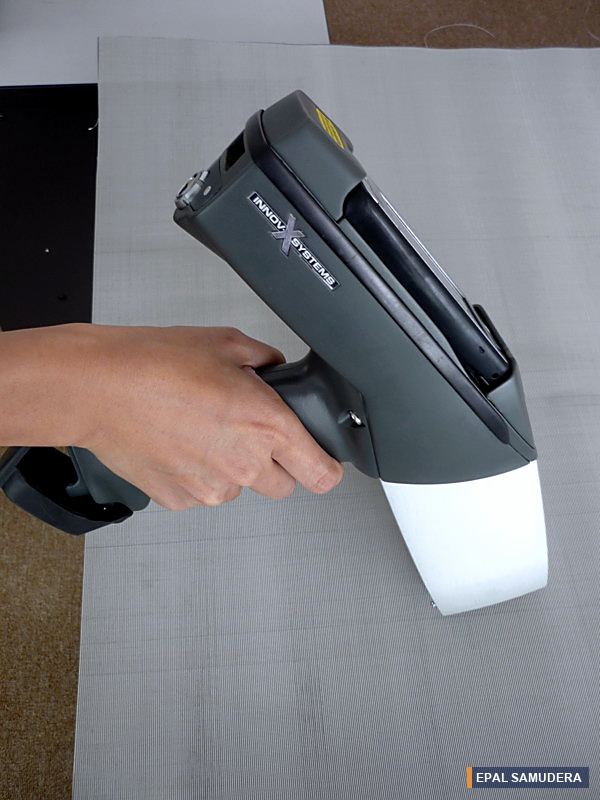
Material grade alone does not guarantee demister performance. Equally important is the precision of wire knitting, crimp geometry, layer density, and support grid fabrication. A correctly specified 316L pad poorly knitted or loosely crimped will underperform a well-manufactured 304 pad. At Epal Samudera, every mist eliminator is produced to controlled wire diameter tolerances, uniform pad density, and certified material traceability — ensuring the alloy's inherent properties translate into real-world separation efficiency, pressure drop stability, and long service life.

Our engineering team is available to review your process data sheet and recommend the optimum material, pad thickness, and density for your specific duty. Contact us for custom demister solutions built to last.