
A demister — also known as a mist eliminator, wire mesh separator, mist extractor, vane pack, or droplet separator — is a critical process internal engineered to remove entrained liquid droplets from gas or vapor streams. Installed in pressure vessels, separators, scrubbers, columns, evaporators, and stacks, demisters ensure that downstream equipment receives clean, dry gas free from damaging liquid carry-over.
At Epal Samudera, we design and fabricate demisters for a wide range of demanding environments across Malaysia and the Asia-Pacific region, serving the oil & gas, petrochemical, chemical processing, marine, desalination, pharmaceutical, sugar, power generation, and air pollution control industries. Whether your process involves sour gas in an offshore knock-out drum, corrosive acid mist from a scrubber, or high-purity vapor in a sterile pharmaceutical vessel, a correctly specified demister is the difference between efficient, compliant operation and costly downstream failures.
Demisters function as passive, maintenance-friendly devices that rely on fluid mechanics rather than moving parts. By forcing the gas stream through a structured matrix of wires, vanes, or fibers, liquid droplets are intercepted, coalesced into larger droplets, and drained back by gravity — all with minimal pressure loss and extremely high separation efficiency.
Types of Demisters
Epal Samudera manufactures a comprehensive range of mist elimination technologies, each optimized for specific droplet sizes, fouling tendencies, and process conditions.
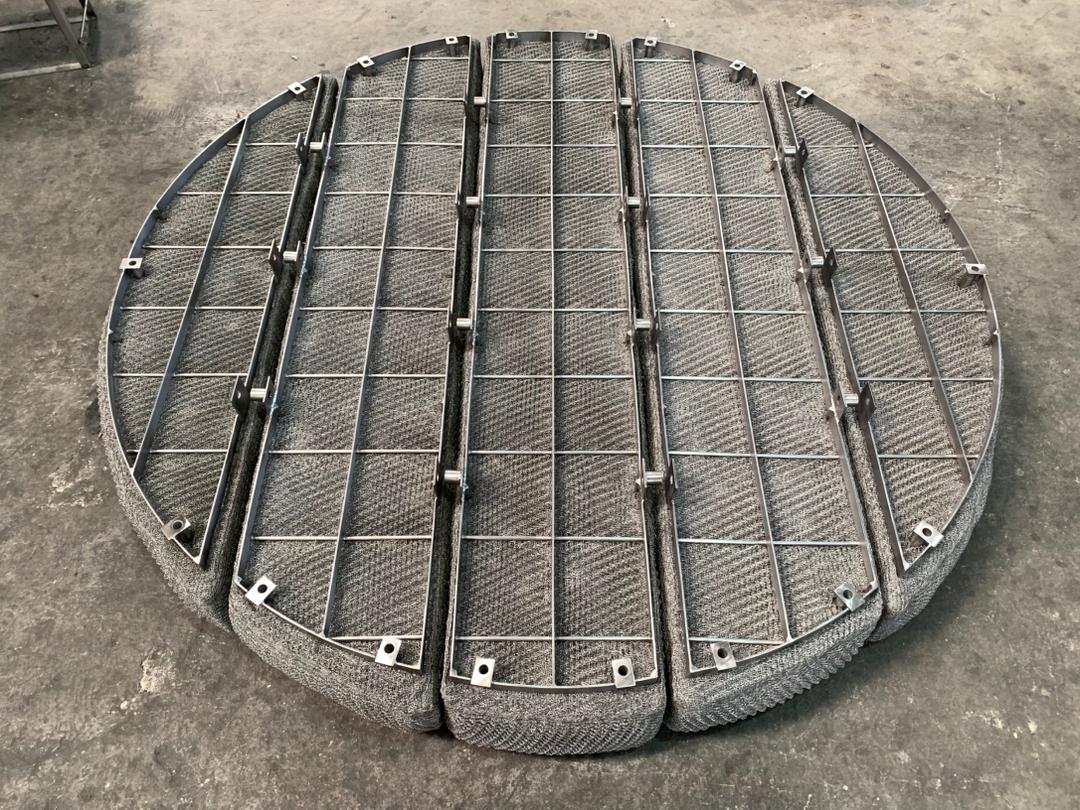
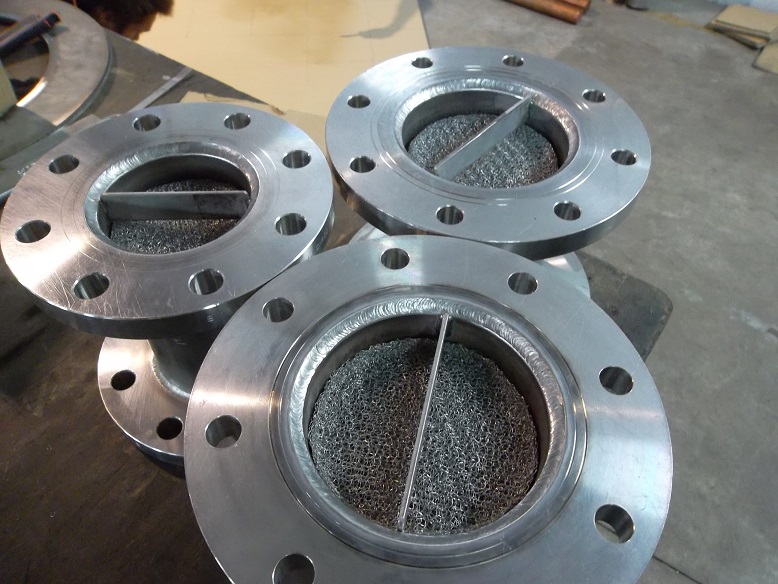
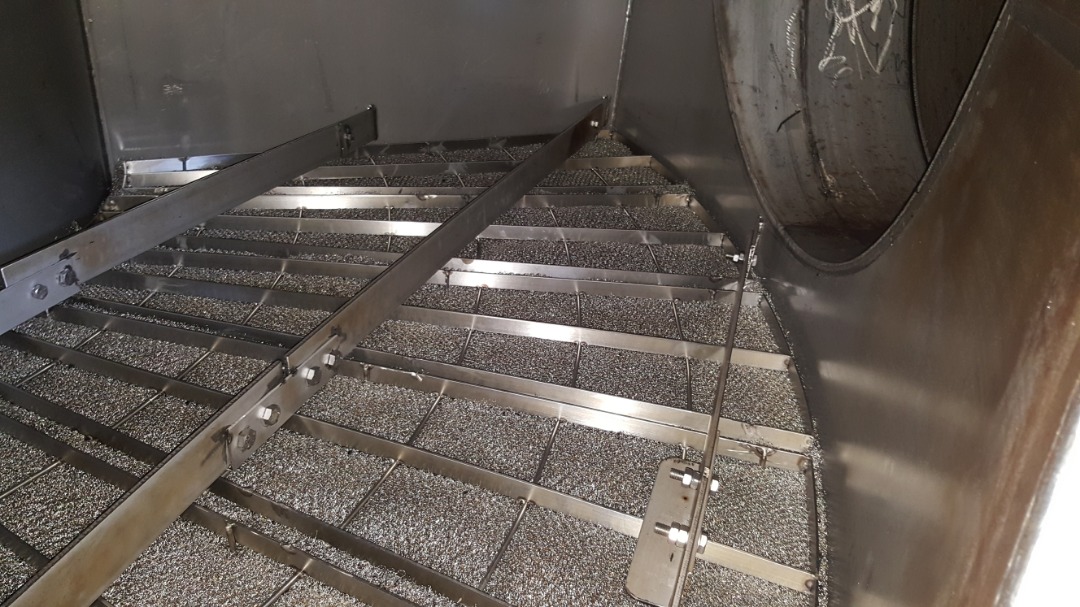
Wire Mesh Demister Pads — The most widely used type, consisting of knitted wire mesh layered into pads typically 100–300 mm thick. Standard knits use stainless steel (SS 304, 316L, 321), while co-knit versions combine metal wire with polymeric fibers (PP, PTFE) or ceramic fibers to enhance capture of finer droplets (down to 1–3 μm) and add corrosion resistance.
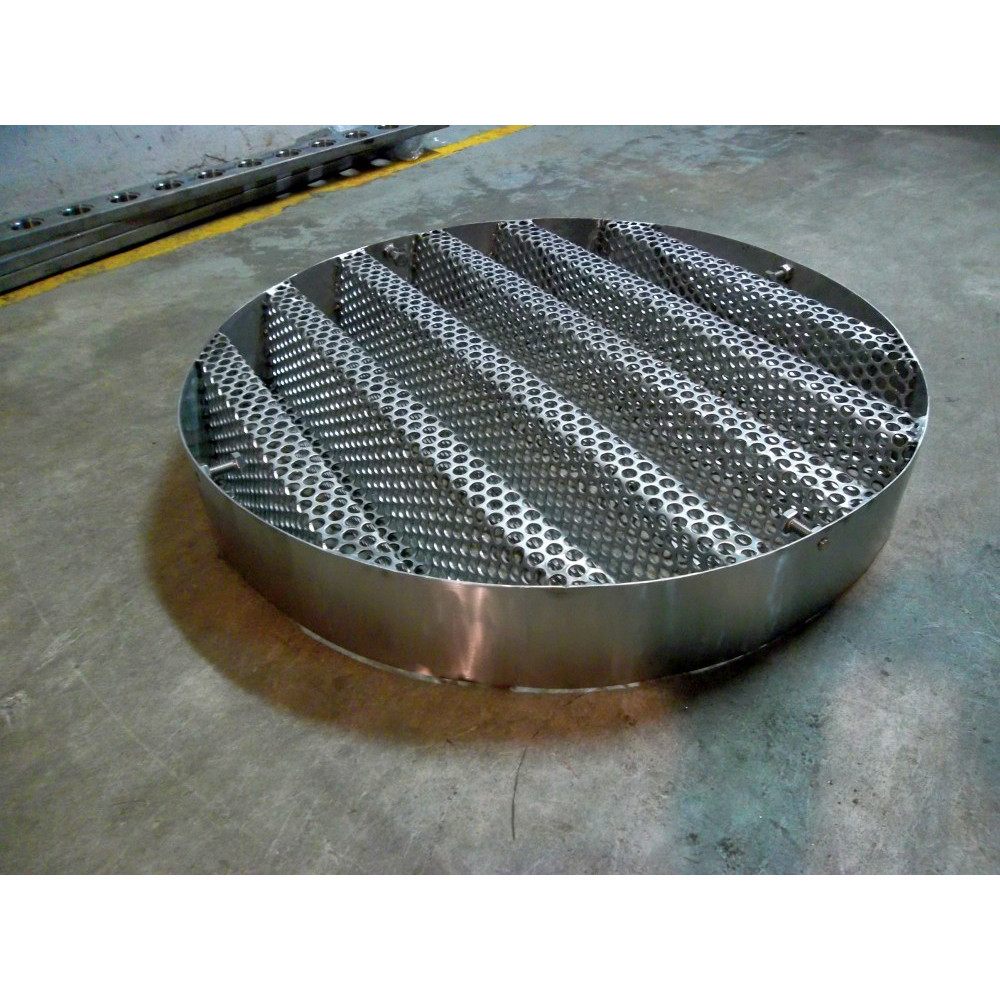
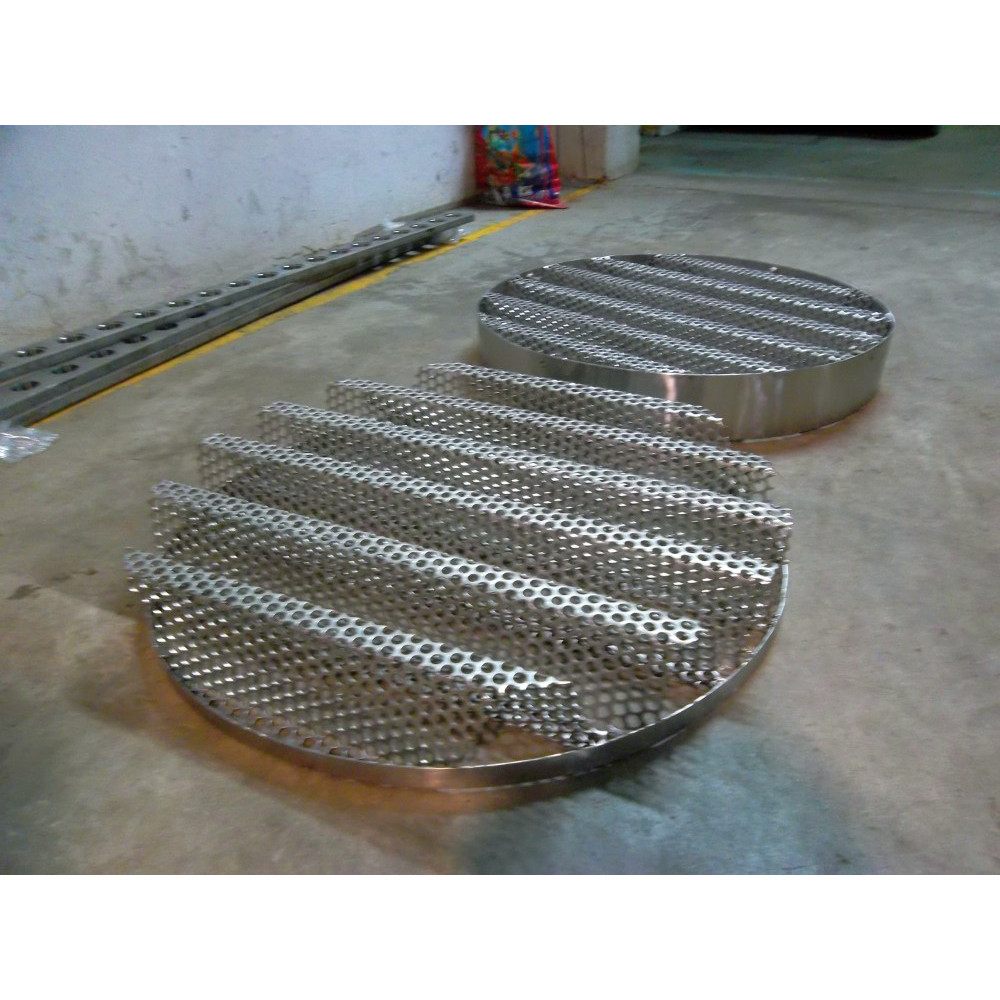
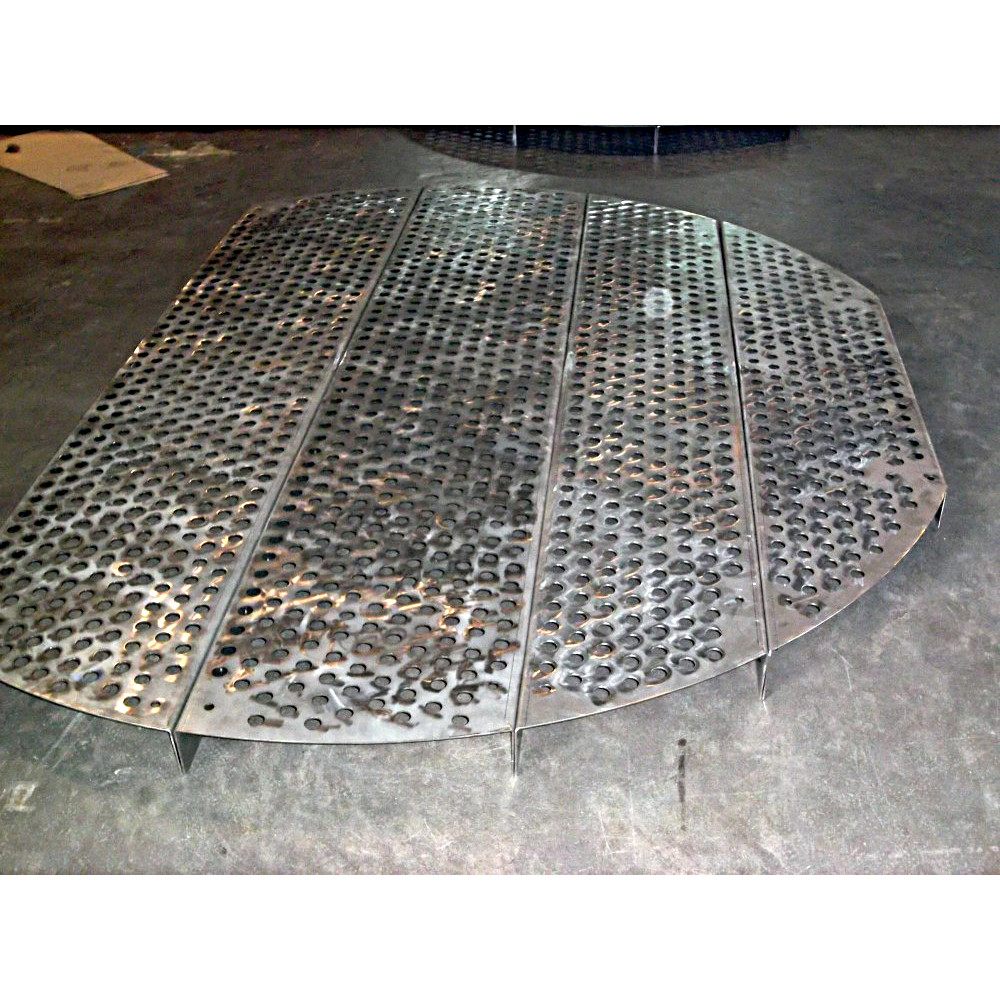
Vane Pack Mist Eliminators — Corrugated metal plates arranged in parallel channels force gas to follow a zig-zag path, throwing droplets onto the plate surfaces by centrifugal force. Available as single-pocket (simple, cost-effective) or double-pocket (higher efficiency, built-in drainage channels). Ideal for high-velocity, high-fouling, and dirty-service applications where mesh pads would plug.
Fiber Bed Mist Eliminators — Packed beds of fine glass, polymer, or ceramic fibers designed to capture sub-micron aerosols — including sulfuric acid mist, oleum, phosphoric acid, and plasticizer fumes — via Brownian diffusion. Typical efficiencies exceed 99.9% on droplets below 1 μm.
Mesh Pad + Vane Combination — A hybrid arrangement placing an upstream vane pack to knock out bulk liquid and a downstream mesh pad for polishing. Provides very high overall efficiency while protecting the mesh from plugging.
Cyclonic (Axial-Flow) Separators — Use swirl vanes to induce centrifugal separation. Excellent for high gas loads, fouling service, and compact footprints — commonly used in HiCap scrubbers and modern offshore separators.
Comparison of Demister Types
| Type | Droplet Size | Efficiency | Pressure Drop | Fouling Resistance | Typical Applications |
|---|---|---|---|---|---|
| Wire Mesh Pad | 3–10 μm | 99.5% | 10–25 mm H₂O | Low–Moderate | KO drums, separators, columns |
| Co-Knit Mesh (PTFE/PP) | 1–3 μm | 99.8% | 15–35 mm H₂O | Moderate | Corrosive mists, high purity |
| Vane Pack | 10–40 μm | 99% | 5–15 mm H₂O | High | Dirty gas, high velocity |
| Fiber Bed | < 1 μm | >99.9% | 100–250 mm H₂O | Low | Acid mist, fine aerosols |
| Mesh + Vane Hybrid | 2–10 μm | 99.9% | 20–40 mm H₂O | High | High-liquid-load scrubbers |
| Cyclonic / HiCap | 8–20 μm | 99% | 20–50 mm H₂O | Very High | Offshore, compact separators |
Demisters separate liquid aerosols from gas streams through a combination of three physical capture mechanisms. Understanding these mechanisms is essential to correctly sizing and selecting the right demister for your service.
1. Inertial Impaction — The dominant mechanism for droplets larger than approximately 3 microns. As gas flows around wire or vane surfaces, larger droplets cannot follow the streamlines and instead impact directly onto the collection element. Efficiency improves with higher gas velocity and larger droplet sizes.
2. Direct Interception — Applicable for mid-range droplets (roughly 1–3 microns). Droplets traveling along streamlines are captured when their trajectory passes within one droplet-radius of the collecting surface. This mechanism depends strongly on wire/fiber diameter — finer elements intercept smaller droplets.
3. Brownian Diffusion — Critical for sub-micron aerosols (< 1 μm), such as sulfuric acid mist or condensation fog. Random thermal motion causes tiny droplets to deviate from gas streamlines and collide with fiber surfaces. Diffusion capture increases at lower gas velocities and with finer fiber diameters — which is why fiber bed mist eliminators are preferred for fine mist.
Coalescence and Drainage — Once captured, droplets coalesce on the wire, vane, or fiber surfaces, growing in size until gravity overcomes surface tension and drag forces. The liquid then drains downward through the pad — countercurrent to the rising gas — and is collected at the vessel sump. Proper drainage is essential; an overloaded or flooded demister will re-entrain liquid and dramatically lose efficiency.
Design Parameters — K-Factor & Souders-Brown
The maximum allowable gas velocity through a demister is calculated using the Souders-Brown equation:
Vmax = K × √((ρL − ρG) / ρG)
Typical K-factors range from 0.10–0.12 m/s for standard wire mesh, up to 0.15–0.20 m/s for high-capacity designs, and 0.05–0.08 m/s for vacuum service. Our engineering team applies these parameters to every custom design:
• Gas velocity: ~0.107 m/s (3.5 ft/s) for standard mesh at atmospheric pressure
• Pad thickness: 100–150 mm standard; up to 300 mm for difficult services
• Pad density: 80–192 kg/m³ depending on wire diameter and knit
• Wire diameter: 0.11–0.28 mm typical
• Target droplet capture: 3–5 μm for standard mesh, <1 μm for fiber beds
• Pressure drop: 10–25 mm H₂O (clean, dry); Removal efficiency: >99.5%
Latest Technology & Innovations
Modern demister design has advanced significantly beyond traditional wire mesh. Epal Samudera stays at the forefront of these developments to deliver best-in-class performance.
High-Capacity (HiCap) Demisters — New-generation HiCap designs combine optimized vane geometries with internal drainage channels, allowing gas velocities 2–3 times higher than conventional mesh — dramatically reducing vessel diameter and CAPEX for new builds and debottlenecking existing units.
Anti-Fouling & Hydrophobic Surface Treatments — Proprietary coatings minimize scale build-up, wax deposition, and salt fouling — extending run length in amine units, glycol contactors, and sulfur recovery tail-gas scrubbers.
PTFE and Polymeric Co-Knit Construction — For aggressive acidic, caustic, or ultra-high-purity service, co-knit constructions blend PTFE, polypropylene, or ECTFE fibers with metal wire — outstanding chemical resistance without sacrificing mechanical integrity.
CFD-Optimized Vane Profiles — Computational Fluid Dynamics modeling enables fine-tuning of vane pitch, pocket depth, and drainage hook geometry — maximizing capture efficiency at minimum pressure drop.
Composite & Hybrid Structures — Multi-stage internals stacking vane, mesh, and fiber layers within a single module achieve broad-spectrum droplet removal from coarse slugs down to sub-micron aerosols in one compact assembly.
Smart Monitoring — Integrated differential pressure sensors and IIoT-enabled monitoring allow real-time detection of fouling, flooding, or damage — supporting predictive maintenance and avoiding unplanned shutdowns.
Applications by Industry
Oil & Gas — Inlet separators, two- and three-phase separators, knock-out (KO) drums, glycol and amine contactors, compressor suction scrubbers, and wet gas scrubbers. Protecting compressors and pipelines from liquid slugs is critical to uptime and safety.
Petrochemical — Distillation column overheads, reflux drums, reactor effluent separators, and quench towers. Efficient mist elimination improves product purity and prevents catalyst poisoning.
Chemical Processing — Absorber and stripper towers, evaporators, crystallizers, and reactor vent scrubbers. We supply Hastelloy, Inconel, titanium, and PTFE co-knit for aggressive chemistries.
Marine & Desalination — Integral to MSF (Multi-Stage Flash) and MED (Multi-Effect Distillation) plants to prevent brine carry-over and ensure distillate purity. Also used in marine scrubbers for IMO 2020 sulfur compliance.
Pharmaceutical & Biotech — Sanitary-design demisters for CIP/SIP vessels, fermenters, lyophilizers, and sterile vent filters. Constructed with electropolished 316L, crevice-free supports, and validated cleanability.
Sugar & Food Processing — Critical in multiple-effect evaporators, vacuum pans, and molasses conditioning to prevent sugar carry-over, improve steam economy, and protect vapor lines from scaling.
Air Pollution Control & FGD — Flue Gas Desulfurization absorbers, wet electrostatic precipitators, and acid mist control stacks to ensure emissions compliance.
Power Generation — Steam drum internals, boiler separators, HRSG blow-down tanks, and turbine inlet fog eliminators protect turbine blades from erosion.
Cooling Towers — Drift eliminators (PVC, PP, or stainless steel) reduce water losses and prevent Legionella-risk aerosol release in industrial cooling systems.
Benefits of Quality Demisters
• Product purity & yield recovery — Capturing valuable liquid that would otherwise be lost as mist.
• Downstream equipment protection — Preventing liquid damage to compressors, turbines, catalysts, heat exchangers, pipelines.
• Emissions compliance — Meeting stringent environmental limits on acid mists, PM, and VOC carry-over.
• Energy savings — Reduced reflux, reboiler duty, and rework from improved separation efficiency.
• Operational safety — Eliminating slugging, flooding, and corrosion caused by liquid carry-over.
• Extended run length — Anti-fouling designs reduce unplanned shutdowns and maintenance intervals.
Why Choose Epal Samudera
Epal Samudera is a trusted Malaysian manufacturer and supplier of high-performance demisters and mist eliminators, serving process industries across Malaysia, Singapore, Indonesia, Thailand, Vietnam, and the wider APAC region.
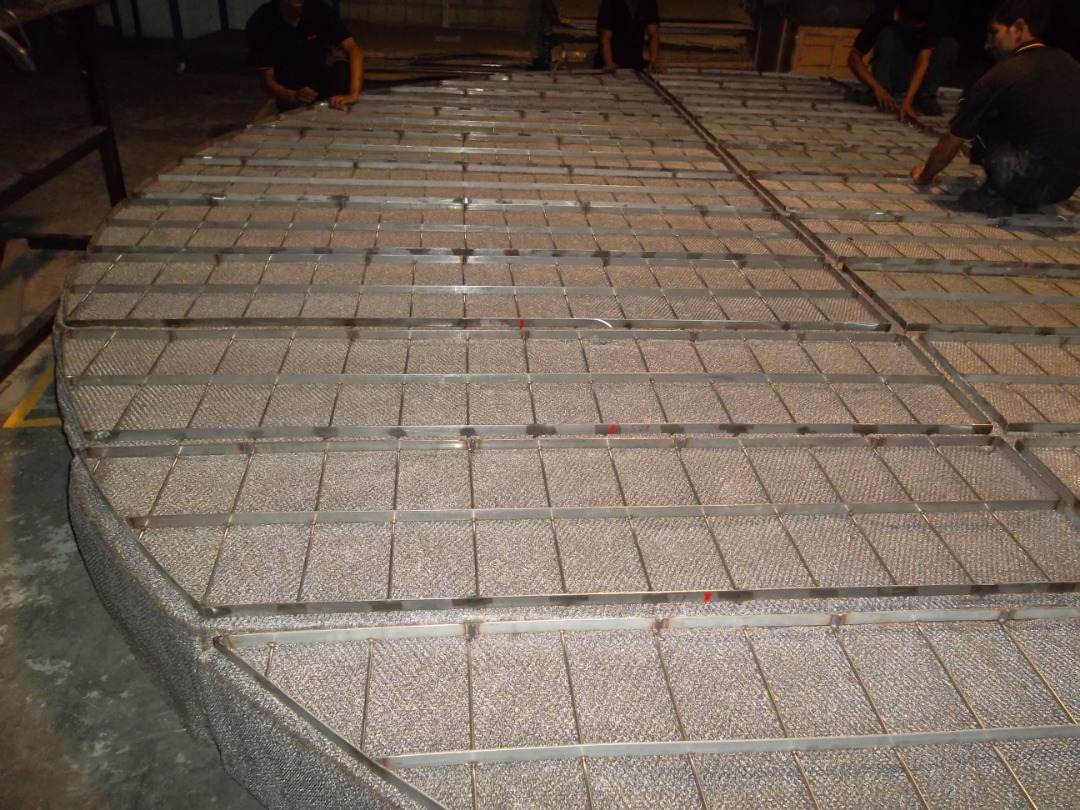
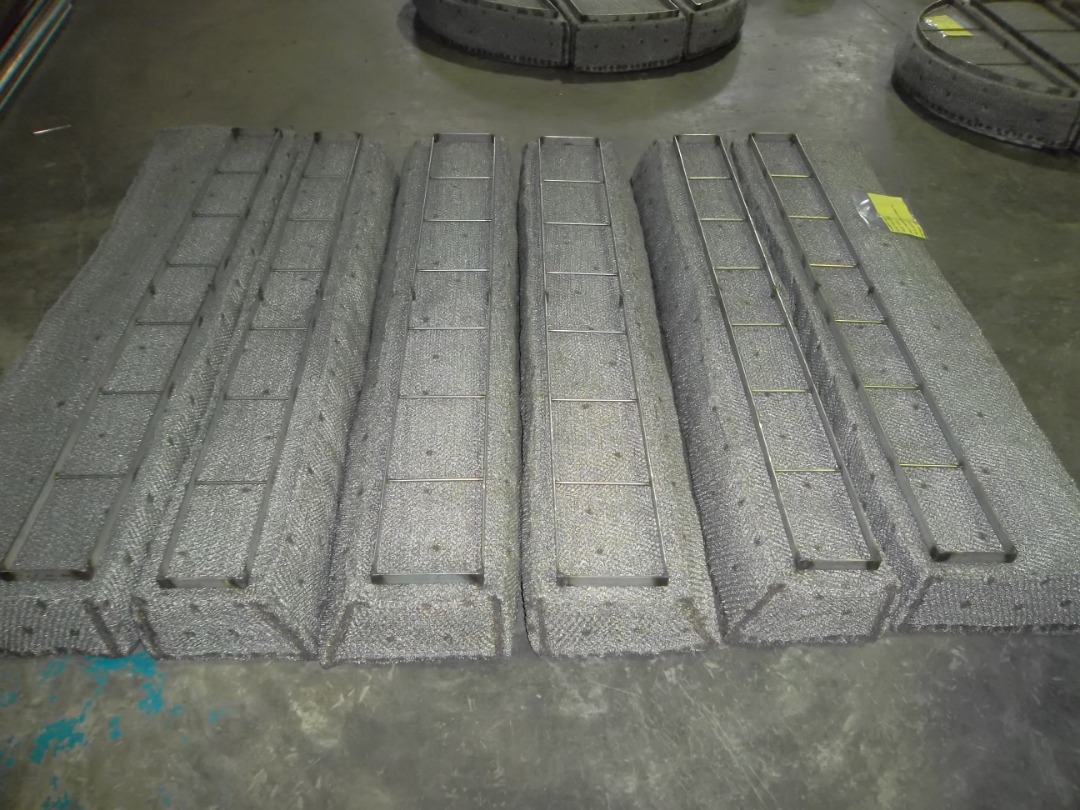
• Custom fabrication — Any shape, size, or configuration: round, rectangular, segmented, multi-layer, retrofit — all manufactured to your vessel drawings and process datasheets.
• Wide material range — SS 304, 316L, 321, duplex, super duplex, Monel, Hastelloy C-276, Inconel 625, titanium, PTFE, polypropylene, and specialty co-knit blends.
• Engineering consultation — Our process engineers assist with K-factor selection, Souders-Brown sizing, material compatibility, and troubleshooting of existing installations.
• Rapid replacement service — Emergency and planned turnaround support with fast-track manufacturing to minimize downtime.
• Quality assurance — Full material traceability, PMI testing, dimensional inspection, and compliance with ASME, API, and client-specific standards.
• Regional coverage — Based in Malaysia with logistics and service support throughout Southeast Asia and beyond.
Contact Epal Samudera today to discuss your demister requirements — from a single replacement pad to a complete engineered mist elimination package. Our team is ready to help you achieve cleaner gas, protected equipment, and reliable operation.